
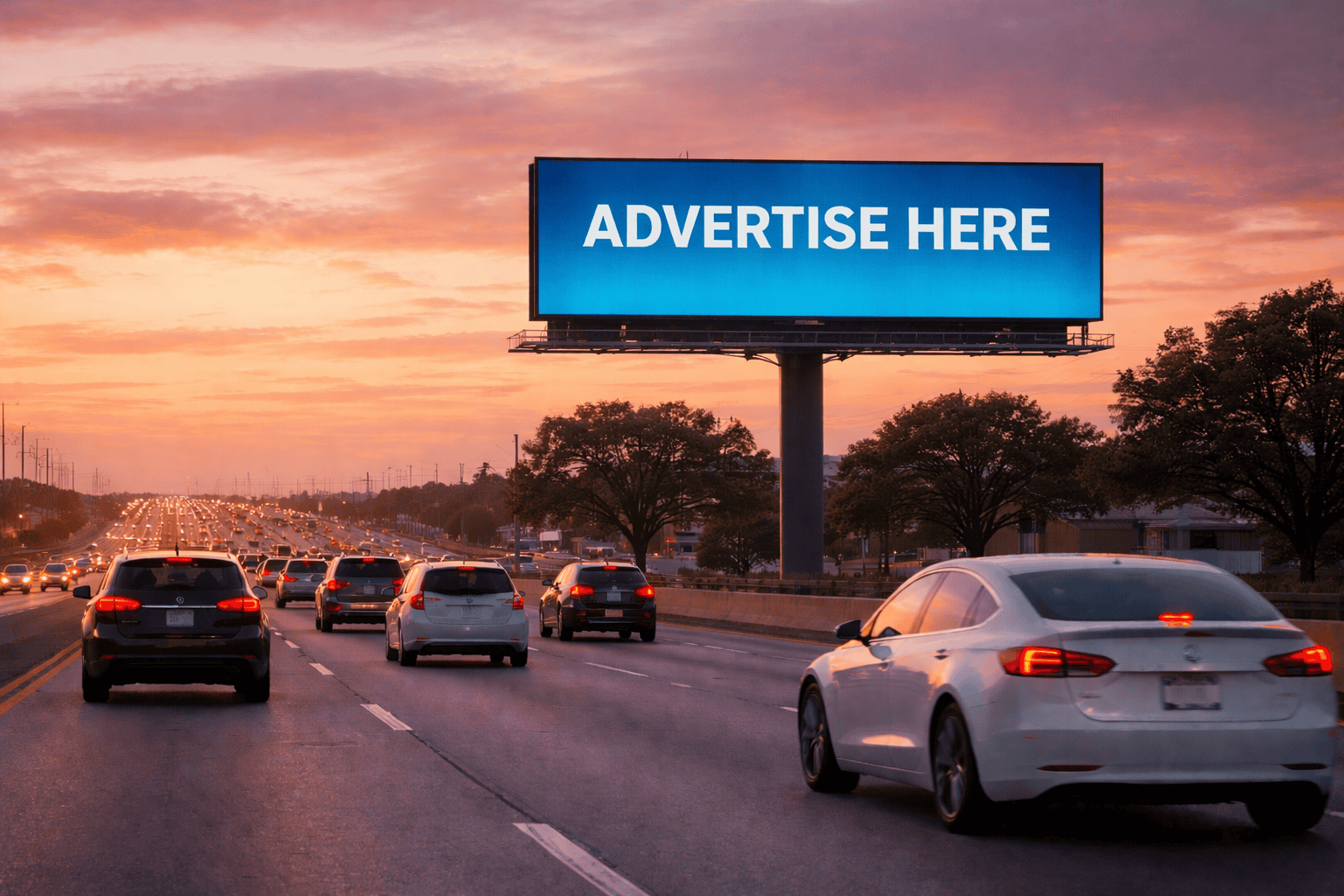
For years marketing shifted toward precision targeting rather than broad brand awareness. Track the click. Measure the conversion. Optimize the funnel. That model made billboards feel outdated.
Whether on highways or websites, they were often dismissed as expensive brand awareness plays that were difficult to measure. But the landscape is changing again.
AI search, privacy changes, and declining organic traffic are pushing brands to rethink how trust and recognition are built. And in that environment, billboards may be quietly returning to relevance.
Broad Visibility Matters; Billboards Serve That Need
Digital advertising spent the last decade optimizing for individuals.
But that model is becoming harder.
Privacy changes such as Apple’s App Tracking Transparency and the phaseout of third party cookies have reduced the ability to track and target users across platforms.
As targeting weakens, broad visibility becomes more valuable again.
Billboards, both physical and digital, do something extremely well. They make a brand visible in shared public space. That visibility builds familiarity.
Familiarity Drives Trust
There is a well documented psychological principle called the mere exposure effect. People tend to develop preference for things they encounter repeatedly.
Research published in the Journal of Personality and Social Psychology demonstrated that repeated exposure increases positive perception and familiarity. (Source: Journal of Personality and Social Psychology) This is exactly what billboards do.
A commuter sees the same message every day. A website visitor repeatedly encounters a brand on high traffic media sites. Over time, recognition grows. Recognition often becomes trust.
AI Search Is Changing the Value of Recognition
As AI begins answering more questions directly, fewer users click through to websites.
That changes the role of brand recognition.
When someone sees a brand name referenced in an AI answer, their prior familiarity matters. If they have already seen the brand on a billboard, podcast ad, or article headline, the name carries more credibility. Recognition becomes a trust shortcut.
In other words, visibility upstream influences trust downstream.
Digital Billboards Are Expanding
Online display advertising is essentially the digital equivalent of a billboard.
For years it was undervalued because marketers focused on measurable clicks.
Yet the global digital display advertising market continues to grow according to Statista. The reason is simple. Display advertising supports something harder to measure but extremely valuable: brand memory.
The Balance Between Brand and Performance
Billboards are not a replacement for performance marketing. They serve a different purpose.
- Performance marketing captures demand.
- Brand visibility creates demand.
The most resilient marketing strategies use both. Visibility builds familiarity. Familiarity increases trust. Trust improves conversion when someone finally searches for a solution.
Three Practical Actions for Organizations
1. Reconsider Brand Visibility
If your marketing strategy relies entirely on search or direct response, you may be missing the long term value of visibility. Strategic placement in high traffic environments can quietly strengthen brand familiarity over time.
2. Think Beyond Clicks
Not every marketing investment needs to produce an immediate measurable action. Some of the most powerful conversion tactics in marketing are recognition and recall, which influence decisions later.
3. Build a Digital Presence That Reinforces Recognition
When someone recognizes your brand and finally visits your website, the experience needs to reinforce that trust. Clear messaging, thoughtful design, and credible expertise make recognition meaningful.
CauseLabs helps organizations build websites and digital ecosystems that turn visibility into trust.
Billboards never really disappeared. For a while they simply did not fit the marketing playbook. But as privacy rules tighten and AI reshapes search, shared visibility may once again become one of the simplest ways to build recognition. And recognition, over time, becomes trust.